Showing posts with label seo services in India. Show all posts

Friday, 3 May 2013

Continuing Google Update March 2013 EVERFLUX


Well the weather finally calmed down yesterday Monday March 25 2013, as high temperatures have been occurring since Friday March 22 2013. Usually when we see temperatures this high at Mozcast a Google update is occurring. However, as Matt Cutts and the Google web spam team mentioned, there will be no more confirmations of updates from Google. This does not mean we won’t be seeing them in action!
On Twitter yesterday on the Mozcast profile the question was asked is this a “Panda Everflux.” Well Google is constantly changing the algorithm so therefore it is always changing anyway. Now it just has more heat behind it and a much bigger punch to the websites that are hurt by this flux.
Recent Reports
On Monday at Seo Hop there was a post published to find out exactly what is going on. A large website in the UK had reached out and said their website lost rankings over the weekend.

Is It Connected?
I do think this is something new with the recent activity and is not connected to the Google Update Panda #25 on March 15 2013.There was no continuous activity from March 15th to now. There is continuous activity from March 22-25th. The longest span of time of high activity we have seen so far.

On the other hand Matt Cutts did mention that the Google Updates will now be rolling updates and would be continuous instead of manually being pushed out. Now we are seeing a new generation of Google updates after two years of manual updates.
Panfecta New Google Update Resource
A website will be published on April 8 2013, teaching how to fix Google penalties, stabilize search engines rankings, and increase traffic. Seo ‘s, internet marketers, and anyone who owns a website will benefit from this as every website needs to learn the future of SEO and how to future proof their website from more Google updates so their rankings and traffic do not decrease. Even websites that were hurt in the past will be able to fix their errors by watching hundreds of videos organized into courses teaching what needs to be done in order to please Google’s algorithm now and in the future. This website is Panfecta and will use the hashtag #GUO, which stands for Google Update Optimization.

google march flux
Serpmetrics
Serpmetrics is also reporting higher activity than normal along the same dates that Mozcast has reported. In fact a 30% increase in search engine flux. This is no coincidence, we are seeing exactly what the Google web spam team said was going to happen.

seo-services-informations.blogspot.com
Serps.com’s recordings are off the charts, the highest we have ever seen. All the tools gauging the search engines are showing major activity these past few days. It is time to adapt and evolve entirely. This is the new normal!
google activity march

Wednesday, 6 June 2012

Difference between Google Panda and Google Penguin


The update of the Google Penguin algorithm in the last week of May has brought this algorithm into limelight. Yet many site owners are still unaware of this latest algorithm of Google. The other algorithm namely the Google Panda is much more popular than the Google Penguin. The most common query that is doing the rounds with the Penguin update is the difference between the two. While Google Panda has been in the scene earlier than Penguin, yet both these algorithms are responsible in bringing down faulty websites from their search engine rankings. The main difference lies in the characteristics that they work upon. Below is a brief description of the two algorithms which will help in getting a clear picture of them.

Google Panda
Google Panda algorithm mainly targets websites with low quality content. Content farms were hit the hardest by this algorithm. Even sites with duplicate content from other sites were penalized by Google. The overall ranking of the websites depends on all the pages of the website. If all the pages have poor quality content then the whole site will get penalized for it. The Google Panda algorithm has also promoted quality websites which had been lower in the search engine rankings. The last update was in 19th April 2012.

Google Penguin
Launched on 24th April, 2012, this algorithm mainly concentrates on the webspam. The websites which do not follow the quality guidelines of Google are penalized and demoted in the search engine rankings. Black hat techniques like keyword stuffing are looked down upon by this algorithm. Some of the points which should be kept in mind by the webmasters to avoid being penalized are listed below:

  1. Comment spamming in blogs using exactly matching anchor text for targeted keywords.
  2. Unnatural inbound links
  3. Exact match anchor text in outbound links coming from poor quality sites.
  4. Low quality directory listing and article marketing

So those who have suffered traffic losses and a decrease in their search engine ranking in the recent times should find out the main reason and work on that to restore their original position.

Thursday, 26 April 2012

Upcoming changes in Google’s HTTP Referrer

Protecting users’ privacy is a priority for us and it’s helped drive recent changes. Helping users save time is also very important; it’s explicitly mentioned as a part of our philosophy. Today, we’re happy to announce that Google Web Search will soon be using a new proposal to reduce latency when a user of Google’s SSL-search clicks on a search result with a modern browser such as Chrome. 

Starting in April, for browsers with the appropriate support, we will be using the "referrer" meta tag to automatically simplify the referring URL that is sent by the browser when visiting a page linked from an organic search result. This results in a faster time to result and more streamlined experience for the user.

What does this mean for sites that receive clicks from Google search results? You may start to see "origin" referrers—Google’s homepages (see the meta referrer specification for further detail)—as a source of organic SSL search traffic. This change will only affect the subset of SSL search referrers which already didn’t include the query terms. Non-HTTPS referrals will continue to behave as they do today. Again, the primary motivation for this change is to remove an unneeded redirect so that signed-in users reach their destination faster.

Website analytics programs can detect these organic search requests by detecting bare Google host names using SSL (like "https://www.google.co.uk/"). Webmasters will continue see the same data in Webmasters Tools—just as before, you’ll receive an aggregated list of the top search queries that drove traffic to their site. 

We will continue to look into further improvements to how search query data is surfaced through Webmaster Tools. If you have questions, feedback or suggestions, please let us know through theWebmaster Tools Help Forum.

Wednesday, 25 April 2012

Introducing Google Drive... yes, really

Just like the Loch Ness Monster, you may have heard the rumors about Google Drive. It turns out, one of the two actually does exist.

Today, we’re introducing Google Drive—a place where you can create, share, collaborate, and keep all of your stuff. Whether you’re working with a friend on a joint research project, planning a wedding with your fiancé or tracking a budget with roommates, you can do it in Drive. You can upload and access all of your files, including videos, photos, Google Docs, PDFs and beyond. 

With Google Drive, you can:
  • Create and collaborate. Google Docs is built right into Google Drive, so you can work with others in real time on documents, spreadsheets and presentations. Once you choose to share content with others, you can add and reply to comments on anything (PDF, image, video file, etc.) and receive notifications when other people comment on shared items.
  • Store everything safely and access it anywhere (especially while on the go). All your stuff is just... there. You can access your stuff from anywhere—on the web, in your home, at the office, while running errands and from all of your devices. You can install Drive on your Mac or PC and can download the Drive app to your Android phone or tablet. We’re also working hard on a Drive app for your iOS devices. And regardless of platform, blind users can access Drive with a screen reader.
  • Search everything. Search by keyword and filter by file type, owner and more. Drive can even recognize text in scanned documents using Optical Character Recognition (OCR) technology. Let’s say you upload a scanned image of an old newspaper clipping. You can search for a word from the text of the actual article. We also use image recognition so that if you drag and drop photos from your Grand Canyon trip into Drive, you can later search for [grand canyon] and photos of its gorges should pop up. This technology is still in its early stages, and we expect it to get better over time.
You can get started with 5GB of storage for free—that’s enough to store the high-res photos of your trip to the Mt. Everest, scanned copies of your grandparents’ love letters or a career’s worth of business proposals, and still have space for the novel you’re working on. You can choose to upgrade to 25GB for $2.49/month, 100GB for $4.99/month or even 1TB for $49.99/month. When you upgrade to a paid account, your Gmail account storage will also expand to 25GB.


Drive is built to work seamlessly with your overall Google experience. You can attach photos from Drive to posts in Google+, and soon you’ll be able to attach stuff from Drive directly to emails in Gmail. Drive is also an open platform, so we’re working with many third-party developers so you can do things like send faxesedit videos andcreate website mockups directly from Drive. To install these apps, visit the Chrome Web Store—and look out for even more useful apps in the future.

This is just the beginning for Google Drive; there’s a lot more to come.

Get started with Drive today at drive.google.com/start—and keep looking for Nessie...


Monday, 16 April 2012

Difference between Google and Yahoo SEO Techniques

Difference between Google and Yahoo SEO


How are you all doing today? Its been a busy week me. I have been using various analytic tools to study and analyze my website traffic sources and few of them are: Stat counter, Google Analytics, Complete, Alexa and most importantly my web hosts own Awstats applications.

Recently I have been doing a lot of keyword research using MarketSamurai and it has helped me top spots on the Google search engine results on the keywords of my most popular blog posts. In addition, to study my visitor demography and the traffic pattern I was doing a bit of research. One particular fact that struck me while doing all the research is that 96% of my website traffic is from Google search engine and 4 percent from other search engines like Yahoo and Bing.

Google Domination
In the search engine sphere, Google simply dominates that traffic that I receive form the website. This does not mean that people do not use Yahoo, Bing or other Search engines. It simply means that I am only optimized for Google and do not rank any where on Yahoo. Even though almost 80% of the Internet users use Google search, There is a bracket of 20% of users using Yahoo search – This means you have a huge potential to bring some untapped source of traffic to your websites.
Factors affecting the Difference between Google and Yahoo SEO
  • On Page SEO factors are given more importance by Yahoo
  • Keyword density is critical for Yahoo
  • Internal links count for page rank in Yahoo system
  • Yahoo does not check Java and iFrame usage as much as Google bots does
The above are few major differences between the Google and Yahoo Algorithm or the factors that they consider before ranking a page in search engines. The factors in detail are explained below:

On-Page SEO factors: Onpage SEO factors affecting your ranking is something that you have total control on. If you are using a WordPress blog, then I take total control of the Onpage SEO using 2 plugins – wpSEO and SEOPressor. In case you are not using a blogging platform, still you could improve your onpage optimization, check out my detailed article on Onpage SEO optimization here
 
Keyword Density: The factor is already part of the OnPage SEO. KD is the ratio between total number of keywords as calculated against non-keywords used in the body text, title, link-anchor text, and meta tags. Even though Google also gives it importance but its comparatively less important unlike in Yahoo.

Internal links count for page rank in Yahoo system: Google considers only external backlinks as a factor affecting the Google PageRank while yahoo also has an internal PageRank system that is on the other hand influenced by internal linking also. Hence Internal cross linking is beneficial if you want to optimize for Yahoo search. The Yahoo page rank is called as “web rank” and is on a scale from 0 – 10.

Java and iFrame usage: Google has an extensive search and indexing algorithm. Yahoo on the other hand does not index or check Java and iframes as much as Google does. 

TakeHome: If you are looking forward to achieving higher ranking in yahoo search results, then you must impress the Yahoo Slurp (bot) with excellent onpage SEO. Make sure you have the right keyword density, Title, Headings, Meta tags, Internal links etc.

Bonus: If you want to see how your page would look for a search engine bot through its eyes, check out the Search Engine Spider view simulator. Hope this article on Difference between Google and Yahoo SEO was helpful.

Google Is The Best Search Engine Why?

Looking through some stats on the blog recently I noticed that someone had searched using this phrase:
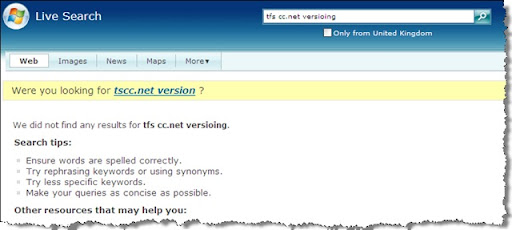
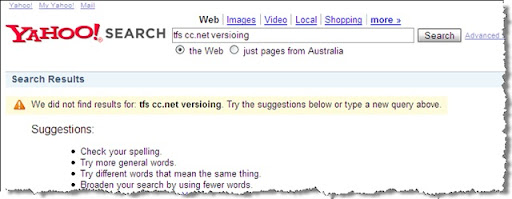
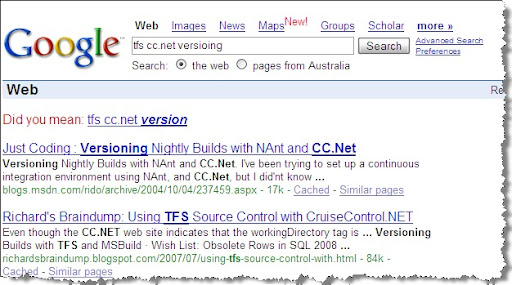
tfs cc.net versioing
Note the missing N in versioNing.
Now if you put the same query into Google, Live.com, Yahoo you get interesting results:
First: Live.com
 search3
Now Yahoo!
search2
And finally Google
search1
So why is Google the best? All 3 search engines typically return results with clean layouts, let you look at cached versions of the page and return results quickly.  But only one engine is truly usable.  Only one engine is forgiving of typing mistakes.  Only one engine returned results.
Google found that there was a typo and went ahead and searched on what it thought the word was meant to be.  If you searched with the word versions instead, Google will give you results that contain both version & versions.
Live.com detected the typo, but didn't offer anything further than a message telling me I can't spell. Click again doofus!
Yahoo! couldn't even tell that there was a mistake!
And as for the little "help" tips that Yahoo! and Live.com show when there are no results?  Well, with a bit of programming computers can spell better than people, they can tell what more general forms of words are, and they can lookup synonyms for what you typed.  In fact, this is what Google does when you screw up.  The only time you get no results from Google is when you type in something so badly misspelled no-one can tell what it should be.
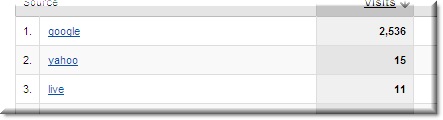
It's this massive usability edge that keeps Google on top.  If another search engine showed up with better usability than Google people would start switching.  Remember AltaVista anyone? It was the dominant search engine of it's time, and then Google came along and showed how easy search could really be and everyone switched.  (P.S. AltaVista is still there - and it also returned nothing in the search, but then again it's owned by Yahoo! so that's to be expected) There's nothing that would stop the same from potentially happening again, though it would be quite a mountain to climb. There's an extremely large dominance factor to overcome. Have a look at these web stats from the last few weeks of my blog for an idea:
search4
Yes indeed. That's a huge lead to try and overcome.

Thursday, 15 March 2012

Google Sucks All the Way to the Bank!

Most of the time when I have a bit of a rant in the newsletter or elsewhere it's because I've seen or heard things that bug me or are just plain wrong. Writing about it gets it off my chest and that's usually the end of it. Unfortunately, that hasn't been the case with the Dear Google rant I had back in Sept.Photo Credit: Saucy Salad

It's not out of my system in the least.

In fact, the feelings I had in that "letter" are growing stronger every day. Most often I notice it when I analyze why certain pages show up highly in Google. It enrages me when I see many pages in the top 10 results that appear to have gotten there through anchor text comment spam. So I think to myself, "Write about it, you'll feel better." Then I remember that I already did write about it and I still don't feel better.

So I tweet snarky comments to Matt Cutts, as well as leave them on Sphinn , but it only makes me feel worse for being mean to Matt, who is a nice guy.

Then I remember what I wrote many years ago in issue 038 of the High Rankings Advisor

"If Google goes public in 2003...we will see it start to suck by 2004. By 'suck,' I mean 'become like all the other engines.'"
I was wrong, in that it took a whole lot longer than one year to really start sucking, but suck it does.

We did see this coming.

Interestingly enough, the sucky results were foreshadowed toward the end of 2003 with what was dubbed the "Florida Google Update"  and the one soon after in January 2004 dubbed "Austin" by WebmasterWorld (we called it "Gladys" at the High Rankings Forum).

Those major algorithm changes by Google created chaos in the search marketing world because Google stopped showing many perfectly good websites for certain search queries, substituting them for what seemed to be much lower-quality sites such as online directory pages. (Causing an unfortunate boom in the crappy directory market.)

What struck me the most about the new search results at the time was that they were heavily biased toward informational pages, rather than commercial ones. Searches for products would yield product review pages or directories of sites that sold those products, but rarely company websites where one could purchase the products directly.

Why go all informational?

Because Google doesn't make money off of their organic search results.
My theory was that if Google could make the main search results "just relevant enough," but not quite provide what the searcher was looking for, the searcher would be more likely to click the sponsored results (ads) that are highly relevant and have exactly what the searcher wants. The searcher is happy, and Google makes money.

Still, back in 2003–2004, the new "informational" type results were not what the average searcher was used to, forcing Google to ratchet down the algorithm to provide more of a mix of informational and commercial sites. But I always felt that we had been given a glimpse of Google's future algorithm.

Which brings us back to today's sucky Google results.

It was done gradually over many years, but Google now provides organic search results that often look relevant on the surface, but either lead to made-for-AdSense content pages or somewhat sketchy companies who are great at article spinning and comment spamming.

Matt Cutts even admitted at a recent conference that Google web spam resources had been moved away from his team.  While I doubt Matt himself was happy about this, those whose bright idea it was are likely laughing all the way to the bank.

But have they gone too far?

Since their poor results are being talked about with more fervor outside of the search marketing industry, it's possible that they have indeed crossed the line. Numerous mainstream publications and highly regarded bloggers have taken notice and written about the putrid results. While Google is used to negative press, the current wave of stories hits them at their core -- or at least what most people believe to be their core -- their search results.

Even though today Google is technically just an advertising platform that happens to offer Internet search, they built their reputation on providing superior results. Because fixing what's broken in the current algorithm can't be very difficult for the brilliant minds that work at Google (Hint: ignore all anchor text links in blog comments, for one thing), we can only assume that they don't want to fix them -- at least not yet.

Most likely the fixes will only be forthcoming if and when they start to lose searchers and/or people stop clicking on the ads. Which doesn't seem to be happening. According to a Media Post article this week on U.S. paid search budgets (which was quoting from the "Efficient Frontier Q4 2010 U.S. Digital Marketing Performance Report"), paid clicks on Google rose 8% year-on-year.

What's an SEO to do?

None of this bodes very well for SEOs. (Which also suits Google just fine.) It seems that as an SEO, your choice is to help ruin the Internet by performing spammy SEO for your clients -- or to heavily invest in Google AdWords -- which of course plays right into Google's hands. [sigh]

I can't bring myself to do anything spammy, so the best I can do is keep preaching best SEO practices, with the caveat that the spammers are likely to win at the moment. But that's obviously not a great business model!

So…anyone in need of a highly jaded, formerly naïve person who knows exactly how search engines *should* work? ;)

Why SEO in All the Right Places Doesn't Cut It Anymore

When I teach my "how to" SEO classes, I begin by telling the students all the things that SEO isn't. I've always felt that it was important because they're often expecting to hear some secret formula for SEO success. And why wouldn't they, with all themyths and outright wrong/bad information that constantly swirls through the SEOsphere? When I finish telling them that everything they thought was SEO really isn't, they stare at me with their mouths hanging open. So I tell them what SEO actually is:

Making your website the best it can be for the search engines and your site visitors.
Image Credit: renaissancechambara
Unfortunately, that doesn't do much to alter their blank stares. After all, it's an incredibly open-ended definition of SEO. Still, it's the only one that truly encompasses what good SEO is all about, as well as why you need to do it. While my method of how to SEO has always been based on that principle, more people are coming around to it in the wake ofGoogle's Panda Algorithm.

Pre-Panda, many people built thriving businesses using the following basic how to SEO process:

  • Buy a keyword-rich domain name that encompasses the products you want to sell.
  • Build a templated website around it.
  • Link internally to the product pages with descriptive anchor text.
  • Use those same keyword phrases in the Title and H tags.
  • Submit the website URL to lots of directories.
  • Drop links to the website in other people's blogs and forums.
Voila! Instant Google success!

They'd repeat the process hundreds of times with different types of products, and then run on autopilot. While it might not have worked on every site they created, the sheer volume of websites they ran would be enough to make them a decent living.

So maybe there was a secret formula after all?

Perhaps, but after Google's Panda Algorithm was implemented, many (but not all) who followed and succeeded with that formula for years suddenly lost a good chunk of their revenue.

What changed?

My own speculation, based on numerous websites that I've reviewed where this happened, is that Google finally decided that there needed to be more to a website than having "SEO in all the right places." And it makes sense. Why should one site do better than another just because they read up on how to SEO and knew the best places to stick their keywords? It shouldn't. And by allowing exactly that to happen, Google was enabling sites with old-fashioned, by-the-book SEO to beat out potentially higher quality websites.

The result was that Google not always giving their own users (the searchers) the best, most relevant sites for the search query at hand. Don't get me wrong, I'm not totally blaming Google here. It has to be a daunting task for a machine to know the difference between an okay (but great with SEO) site and a great (but perhaps not so great with SEO) one. Especially when so much of how Google tried to determine relevancy and quality was based on links – and even more on anchor text. It simply became too easy to game that system.

Giving Google What They Wanted

I certainly understand and even empathize with those site owners who've lost a significant portion of their income. They were just giving Google what it wanted. And because it worked so well, they had no reason to go above and beyond their basic formula. Why build a brand for your company when a keyword-rich domain would provide a better return on investment? Why spend time becoming an expert in your industry and educating your target market on the intricacies of your products when you could hire someone to write low-quality "SEO articles" and submit them to article directory sites instead?

Interestingly enough, many of the business owners I've talked to who have been getting by with formula SEO all these years have told me that they have tons of happy customers. Yet there are no obvious signs of this online, such as glowing reviews on Google Places or other online review sites (there aren't bad ones either). How are customers even supposed to remember the name of a company called something like WoodAndMetalDiningRoomChairs.com? (I just made that one up.)

Mainly, customers found these websites through Google, made their purchase and received their merchandise. There's nothing wrong with that, but there was also no personal connection made. This is further illustrated by the fact that if you look at social media sites, you won't see much chatter about these companies. In fact, many of them don't even use social media, or simply have cursory accounts. Again, they didn't need to.

No Marketing Budget

A marketing person, plan, or budget was never necessary nor even a consideration. Sadly, for those companies, they don't have much choice anymore if they want to stay in business. But ironically, now that they really need a marketing budget, there's no money in the till to go toward it.

If I've just described your business and websites – even if you haven't lost a portion of your revenue (yet), you may have thought you could hire a new SEO company to mix in a little extra SEO mojo and fix up your Google problems. But while they might find some on-page or off-page things you could be doing better, I wouldn't count on that to bring back your lost traffic and sales.

So what should you do?

You need to seriously rethink your online strategy. You need to stop saying, "Well, it always worked for me in the past." You need to build a brand and you need to market the heck out of it. You may even need to consolidate all your related keyword-rich domain websites into one big brand website. (Don't do that last one without consulting a professional.) You need to learn everything you can aboutsocial media marketing and start doing it. You need to get in contact with your happy customers and ask them to write reviews online as well as to evangelize about you to everyone they come in contact with. You need to also keep in contact with them in a variety of ways.

All of those things are going to make a much bigger difference over the long haul than rewriting your title tags or adjusting your keyword density. The big takeaway here is that while your website may already be the best it can be technically for search engines, it's time to make it the best it can be for your users. Both parts of that equation are equally important. It's not going to be quick or easy, but if you want to stay in business, it's probably going to be necessary.

Google (and Bing) Love Anchor Text Link Spam

While many bloggers and the media are calling Google's search results out lately, most of Photo Credit: Elsie Esq.the focus has been on the somewhat low-quality pages that show up for informational long-tail searches. My concern for Google's search results is different, however. As I touched upon in the last newsletter, I'm tired of Google (and Bing) returning sites that use anchor text link spam to get on the first page of results.

For those who don't know what anchor text is, here's a quick explanation:

Anchor text is the words in the clickable part of any link. For instance, when someone links to my site, they typically use either my name or my company name in the anchor text, which looks like this:

Jill Whalen is an SEO consultant.

Or...

Visit High Rankings for SEO consulting.

But those links are nojavascript:t all that valuable in SEO terms. What would be better (for search engines) is for the links to be more like these:

Jill Whalen is an SEO consultant.

Visit High Rankings for SEO consulting.

...with the keywords that people might type into Google (or Bing) as the clickable anchor text link.

Search engines assign a lot of weight to the words that are in that clickable link. It does make sense because you're telling both people and search engines what they'll get when they click the link.

The problem is that it's not a natural way for people to link unless they know a bit about how search engines work. It's more natural to link using the company name, even through links that just say "click here" or "more information."

Part of what I do as an SEO consultant is to train clients to think like a search engine. I teach clients to link more descriptively on their own sites via "internal" links as well as linking to other "external" sites. But to get honest-to-goodness natural links – that is, links from others just because they really like you or your company – it's unlikely that the link will have the best anchor text for search engines. And yet, natural links are exactly what Google claims to value. It's what their PageRank algorithm was originally based on.

But today, natural links and true citations are nearly useless in helping search engines show the best sites for the search query at hand.

For instance, this past Sunday I was quoted in a Washington Post story aboutGoogle's less-than-stellar search results.

I spoke with the reporter for quite some time and also emailed him numerous examples of how some companies easily manipulate Google. He was kind enough to mention me and my company (on page 2) in the article, which was great -- but there was no link. I don't know if it is the Washington Post's policy not to link, or if they just don't think about it, or if they have never been taught to link. It seems to me that a mention in the Washington Post in this context provides me and my company some credibility, because the WP is a mainstream news outlet. Yet any credibility I may have gained with the people reading the article is completely lost on Google because there's not only no descriptive anchor text link, there's no link at all!

Instead, the links that Google (and Bing) end up valuing the most are those where people control the anchor text. Unfortunately, when anchor text can be controlled, it often means that the link:

  • was purchased
  • was traded for
  • was added to a site that is controlled by the owner
  • was added to a site in a network controlled by multiple stakeholders (like a link farm)
  • was added into an article or bio of an article and posted to an article directory or similar
  • was used in a blog comment
  • was part of a forum signature
  • was obtained naturally, but the linker had to be asked to edit the anchor text.
Only the last one of those is truly in line with what search engines want to value, and even that one is sketchy because it becomes somewhat unnatural by virtue of requesting different anchor text.

May the Biggest Spammer Win

Most reasonable people would agree that it doesn't make sense that the companies who own or take part in a network of interlinked websites should rank higher than those who don't. And why should the websites that have people "writing" boatloads of blog comments outrank their competitors who have no desire to spam others' blogs? If you're commenting because you'll possibly get some link value rather than because you feel the need to add to the conversation, it adds unnecessary clutter and should be considered spam by the search engines (in my opinion). I wouldn't be surprised if 90% of blog and forum comments fall into that category, as do most articles submitted to article directories.

Here's the Rub

All of the above types of links still count very highly in Google (and Bing). While links and their anchor text are by no means the only ranking factor for how sites show up in the search engines, they are a very large one at the moment. And surprisingly, neither the relevance nor the quality of those links appears to play as big a role as search engines would like you to believe.

You can take any product search query (both highly competitive and somewhat competitive) and review the backlinks of the sites that show up in Google's (or Bing's) top 10 to 20 results and see what I'm talking about.

Random Example

Let's look at the search query "baby furniture," which I just randomly thought of as I was writing this. I'm not going to call out any of the sites by name, and your results may differ slightly from mine, but you should get the picture.

The first site to show up in Google is a big brand, which makes sense. In fact, I wasn't even going to check the backlinks because I figured they likely deserve to be there based on their brand. But then I noticed it's just a random catalog page from their site. So I looked at their backlinks, and sure enough, there are 357 links pointing to that one page, most from completely irrelevant sites. Some are even hacked sites and porn sites. But they've got keyword-rich anchors that Google (and Bing) love. Many of the links are in blog comments and others in "partner site" areas (paid links). Wonderful.

Let's check the #2 site that shows up in Google (which for me was the #1 site in Bing). Looks like there's a whole network of interlinked baby-related sites that use keyword-rich anchor text links to get all the various sites to rank well for those words. While it's possible that all those sites have different owners and they really just want to recommend (using juicy anchor text) all those other baby product sites, it sure smells fishy to me! At least in this case they seem to be on relevant sites, unlike the big-brand one above.

The #3 site that I see on Google is also a big brand, and it looks as if many of their links are purchased from mommy blogger-type sites, based on my random clickthroughs of their backlinks. While they at least seem relevant, most are anything but natural. I would consider them akin to ads, aka paid links. Nothing wrong with them purchasing ads on relevant sites, but it's Google's job not to count paid links, and yet they do.

The #4 site is owned by a big brand, but is separate from the brand's main website. It looks as if this one may not be spamming...yay! They seem to do well based on links from their parent company site and actual recommendations from other sites. I am basing that assertion on the fact that the links are mainly the website name, not a keyword phrase. So Google may have gotten that one right! (That site doesn't show up in Bing's top 10 for me, however.)

Spammers Rule - Google (and Bing) Drool

I think I'll end my backlink checking here because it upsets me to see how easy it is for link spammers to get pages ranked for highly competitive phrases. Remember, this was just ONE random phrase I checked. I have no clients in the baby furniture space or anything like that. You can type in any type of product search for yourself and see similar results. Seriously, I'd be shocked if you could find a Page 1 general product SERP in Google (or Bing) where most of the sites WEREN'T link spamming their way there.

The conundrum for Google (and Bing), as I mentioned in my Google Sucks article, is not that the pages or websites that show up in the results for these searches are necessarily bad or irrelevant. Those top 4 results for baby furniture all seem like good choices at first glance -- which is what makes it so sickening that someone felt the need to link spam on their behalf. On the other hand, can we fault them for using techniques that work?

My Question Is, Why?

Why would Google (and Bing) allow companies who spam to show up anywhere in their search results, never mind in the top slots? I can spot the spam quickly and easily in just a few minutes; surely with Google's fancy tools they could do the same. Are there really not enough sites that don't link spam that are worthy?

I'm not saying that the search engines should penalize the sites in question. That would leave things open to rogue competitors who might spam on their behalf. But why doesn't Google stop counting the spammy links? And why not stop counting anchor text so heavily, since it's nearly always contrived? I have a feeling that Matt Cutts from Google may tell me that they aren't counting those links already, but I just don't believe it. In most of the results I looked at, there were not enough other factors to explain the Page 1 rankings.

I'll leave you with one additional thought...

If Google doesn't want to (or doesn't know how to) not count spammy links, perhaps this is an opportunity for Bing to set itself apart and become the better search engine. I can't help but think that completely discounting unnatural links and anchor text could only be a good thing for the search engine that eventually implements it.

The Meta Description Tag

The keywords and phrases you use in your Meta description tag may not affect your page's ranking in the search engines, but this tag can still come in handy in your overall SEO and social media marketing campaigns.

What Is the Meta Description Tag?

It's a snippet of HTML code that belongs inside the <Head> </Head> section of a web page. It is usually placed after the Title tag and before the Meta keywords tag (if you use one), although the order is not important.

The proper syntax for this HTML tag is:

<META NAME="Description" CONTENT="Your descriptive sentence or two goes here.">

If you're using a content management system (CMS), look for a field to fill out that's called Meta Description, or possibly just "Description."

Many years ago, the information contained in a Meta description could slightly help a page rank highly for the words that were contained within it. Today, neither Google, Bing, nor Yahoo! use it as a ranking signal.

In other words, whether you use your important keyword phrases in your Meta description tag or not, the position of your page in the search engine results will not be affected. So in terms of rankings, you could easily leave it out altogether.

But should you?

There are 3 important ways that Meta descriptions are being used today that make them an important part of your SEO and overall online marketing strategy:

  1. They can be used as the description (or part of the description) of your page if it shows up in the search results.
  2. They are often used as part of the descriptive information for your pages when Google shows "extended sitelinks" for your site.
  3. They are often used as the default description in social media marketing links such as Facebook and Google+.
Let's look at each of these in more detail.

1. Meta Descriptions in the Search Results

People often think that whatever they put in their Meta description tag will be the default description that the search engines use under the clickable link to their site in the search results. While this is sometimes true, it's not always the case.

Currently, if you're searching for a site by its URL (for example www.highrankings.com) Google tends to use the first 20 to 25 words of your Meta description as the default description in the search engine result pages (SERP). However, if you have a listing at DMOZ, also known as the Open Directory Project (ODP) and are not using the "noodp" tag, they may default to that description instead. (Do a search at Google for www.amazon.com to see an example.)

Bing and Yahoo!, on the other hand, don't always default to the Meta description tag for URL searches. Sometimes they do, and sometimes they don't. A search for www.highrankings.com at Bing or Yahoo! shows content from my home page as the description rather than the contents of my Meta description tag.

Of course, real people aren't typically searching for a site by URL, so what the search engines show for those types of search queries is not as important as a true keyword search. So don't get hung up on what you see when you search for your site by its URL or if you're doing a "site:command" search to see how they're indexing your pages.

Instead, go to your favorite web analytics program and find the keyword phrases that are currently bringing you the most traffic. Then see what your description looks like at Google when you type in those keywords.

And surprise! What you'll find is that your search results description will be different for every search query! You may see any combination of the following used:
  • Your entire Meta description tag text as the complete description (typically if it's highly relevant and contains no more than 25 words).
  • A full sentence pulled from your Meta description tag, but not the entire Meta description (if it contains more than one sentence).
  • Text from one part of your Meta description mashed together with text from another part of it (if it's more than 25 words long).
  • Some text from your Meta description mashed together with some text from the page.
  • Some text from your page mashed together from some other text from your page (nothing from the Meta description).
Some of the circumstances that cause Google to not use text from your Meta description may include:
  • The information in the Meta description tag was not specific to the page it was on.
  • The search query used some words that were not in the Meta description, but those words (or some of them) were used in the page content. This includes words that Google considers somewhat synonymous, such as "copy" and "copywriting" or "SEO" and "search engine optimization."
But even the above are not hard and fast rules. Google doesn't always use all or part of the Meta description even when the exact search phrase was contained within it – especially if the search query is also contained within the content of the page. Suffice it to say that there are no hard and fast rules for when Google will show it and when they won't.

My recommendation is to always use description tags on any pages where you get search engine visitors (or hope to get them). Make them very specific to the page they're on by describing what someone will find when they click through to the page from the search results, while also using variations of your targeted keywords.

Because Google will show only show around 20 to 25 words as your description, many SEOs recommend that you limit this tag to a certain number of characters. In reality, however, you're not limited to any specific number. Your Meta description tag can be as long as you want it to be because Google will pull out the relevant parts of it and make their own snippet anyway.

For instance, if you're optimizing a page for 3 different keyword phrases, you could write a 3-sentence Meta description tag, with each sentence focusing on a different phrase. You could probably even insert more than 3 phrases in those sentences if you're a good wordsmith. The idea, however, is not to stuff this tag full of keywords, but to write each sentence to be a compelling marketing statement – a statement that naturally uses the keywords people might be typing into Google to find your site.

2. Meta Descriptions and Extended Sitelinks

These days, Google often uses the first few words from your Meta description tag when they create the "extended sitelinks" for your website. But this too is not set in stone and is highly keyword dependent. You'll see different sitelinks and different descriptions showing up depending on the words a searcher used at Google.

As an example, if you do a search for "High Rankings" at Google, you'll see my sitelinks for that search query.

Google Sitelinks for High Rankings

At this moment, Google is showing my home page as the top result with 6 inner pages beneath:
  • Forum home page: Description is from DMOZ/ODP. This page has the generic Meta description that is on every page of the forum.
  • Link building forum home page: Description is content pulled from the page that uses the words "High Rankings" in it.
  • SEO articles page: First part of Meta description.
  • Newsletter home page: First part of Meta description.
  • SEO/SEM resources page: First part of Meta description.
  • SEO classes page: First part of Meta description.
For the most part, they're using the first part of the Meta description as the sitelink snippet, but not always. You may have noticed that I optimized those Meta description sitelink snippets that are showing by front loading them so that the first 5-7 words or so are a short description of what the page is all about.

But here's the rub. Do a Google search for "Jill Whalen SEO." You should still see sitelinks, and you'll even see some of the same ones as with the previous query, but some of the descriptions are different:

While the forum home page shows in both, this time Google has pulled text from the page rather than using the DMOZ/ODP description. This is likely because this search query had the word "SEO" in it while the other one didn't. The SEO articles page also shows up here, and it is using the same Meta description snippet as the High Rankings query. The other sitelinks are different from before, with 3 out of 4 using the Meta description.

As you can see, while you do have some control over your sitelink descriptions via your Meta description tag, Google might not always use them (just as Google does with their regular search results). Your best chance of having them show is to use, close to the beginning of your description tags, the words that you know pull up sitelinks. Also, be as descriptive as possible within the first 5 to 7 words.

3. Meta Descriptions and Social Media Marketing

Ever wonder why some Facebook links have great descriptions and others don't seem to make any sense? It's because some site owners have taken the time to write a summary of the article and place it into their Meta description tag, and some have not. If your article has a Meta description, Facebook and Google+ will default to that when you share a link on your profile or "Page." If there's no Meta description, you'll usually see the first sentence or so from the page being used as the default.

While anyone can edit the description that Facebook defaults to, most people don't. And at this time on Google+ you can't even edit the default description. You can either leave it as is or delete it all together. Let's face it -- most of the time the first sentence of an article is not a good description of the rest of it. It's not supposed to be, because that's not what a first sentence is for!

Therefore, I strongly advise you to always write a compelling 1- or 2-sentence description for all of your articles and blog content that may be shared via social media, and place it into your Meta description tag. This will give you a big jump on your competitors who haven't figured this out yet, making your social media content much more clickable because people will know what the article is actually about before they click on it.

Overall, the Meta description tag gives you a little bit more control over what people might see before they click over to your site. The more compelling it is, the more clickthroughs you should see. If your Meta description tags can help with that, then it's certainly worth the few minutes of time it takes to create interesting, keyword-rich tags that sum up what users will find when they arrive!

It’s time to stop PROTECT IP


SOPA galvanized the tech community, from start-ups to venture capitalists to the largest web companies. SOPA was an unexpected shock and a wake-up call. Well, guess what? Now the internet is awake. And I don’t think it’s going back to sleep any time soon. We might need to rally again in the near future, but we can do that. The internet learns fast.
Now it’s time to rally and get loud. It’s time to call your Senators. Heck, it’s time to ask your parents to call their Senators. If you think the internet is something different, something special, then take a few minutes to protect it. Groups that support SOPA have contributed nine times more money in Washington D.C. than our side. We need to drown out that money with the sound of our voices. I’d like to flood every Senator’s phone, email, and office with messages right up until January 24th.
If you need a quick refresher about why the Stop Online Piracy Act (SOPA) and PROTECT IP Act (PIPA) are horrible ideas, Google did a blog post talking about how SOPA and PIPA will censor the web and won’t stop actual pirates. Or read about how capricious takedowns can cause serious collateral damage. Find out how real, legitimate companies can be run out of business.
What you can do?
It’s time for action. Call your Senator right now. Spread the word to your friends and family. Promise not to vote for politicians who support SOPA. Print out some PDFs and post them at work or on your campus. There’s also protests and meetups happening today in New York, the Bay Area of California, and Seattle. Don’t live in the United States? You can still petition the State Department at americancensorship.org.
This is it. You want to look back months from now and know that you did everything you could to protect the internet. Call your Senators, educate your friends and family, and please spread the word about PROTECT IP and SOPA as widely as you can.
But if you can only spare five or six minutes, please call both of your senators below:

Thank you!

Monday, 12 March 2012

Give Your Blog a Fighting Chance

With so many blogs on the Internet competing for attention, what can you do to make sure that yours stand out? At the very least, you can try to avoid making mistakes. Better, you can take the tips that tell you what NOT to do and turn them around into things you SHOULD do.


Recently I read Neil Patel's piece on mistakes that will bury your blog posts. It occurred to me that warnings like “don't forget” do not get remembered well. So let's look at his list of mistakes, and turn them around so you know what you should be doing to avoid those mistakes.

Patel starts with the first thing most readers of your blog posts will see – your headline. They'll see this long before they arrive at your website. It's picked up and displayed on the search engine results page, in feed readers, subject lines, and even links included on social media sites, if you've structured your URLs and permalinks correctly.

Since it's the first thing potential readers will see, your headline needs to draw them in. You can find plenty of articles on writing good headlines. Patel recommends that you write with “u” in mind: write “headlines that are unique, ultra-specific, useful or urgent.” You can even use more than one “u” quality. “Five Things You Must Do Right Now if You Want More Conversions” is both ultra-specific and urgent, for example.

Patel's second point concerns old posts. Don't write them and forget about them; link to them when you can. They give your posts new life, and they show your readers that there's more content on your website in which they might be interested. When you can use a link to further explain a point you're trying to make, you give your reader the option of delving deeper if they're so inclined. You also point search engine spiders to related material, including keywords you want them to notice.

But you shouldn't just link to your own earlier blog posts. As Patel points out, when you link to posts by other bloggers writing on similar topics, you're inviting them into the conversation. They can come back and leave comments to which you can reply, starting a dialogue or even a relationship. These comments deeply enrich the blog post for anyone who reads it. I can't tell you how often I've read a blog post and found more gems of wisdom in the comments – some of which have directed my own thinking on the topic, or even inspired me to write separate articles.

Linking to posts by other bloggers also gives you a chance to give credit where it's due, which is simply “proper manners on the web,” as Patel notes. That's especially true if that other post inspired your blog post in the first place. Readers will notice if you got the idea elsewhere but didn't link, as many with a particular interest will read several blogs on the same topic. Outbound links also, as it turns out, have a good effect on your rankings if you're linking to authority sites, according to Patel.

So far I've focused on what may appear to be little details, but they're far from being the only ones you need to get right to get your blog posts noticed. What about your meta data? Some meta data may not be important because the search engines don't look at it anymore (you can thank keyword stuffing practices for some of that), but there are a few items that still matter. At the very least, you should fill in your page title field; filling in your description field is also a good idea. These fields can help the search engines figure out where your page belongs in the results. They can also help social sites pull the right information when someone is posting a link to your blog.

Patel recommends making this easy on yourself if you use the WordPress platform by taking advantage of a plug-in. The All-in-One SEO pack can make your life easier by including fields for the page title and description at the bottom of your post. Fill those out, and you're good to go.

Now I'd like to come back to the subject of URLs. I've already hinted at it once or twice. You need to make sure the permanent URLs for your blog posts are user-friendly. If you check the URLs on any post here on SEO Chat, you'll notice that they all include real words; usually, you'll see the title of the article. You should shoot for this on your own site.

This point mattered even before social networking sites grew popular, because a good URL helps the search engines to understand what the page is about. It also helps searchers who see your URL in the search results. Now it's more important than ever, because readers who like your article will post a link to it on social sites. That means people who might never have searched for your article may come across a link for it, recommended by a friend – and if what they see in the link looks interesting, they might actually click and read. Including real words in your link gives you a better chance to entice them.

I'll wrap this piece up with a less technical, though no less important, point: like anything, blogging requires persistence if you want to get noticed for it. By this, I mean consistent effort. Attention spans run short on the Internet, so if you're not blogging frequently, readers will forget about you. As Patel observes, “the more frequently you post, the more traffic you are going to get. That traffic eventually slows and then dies when you stop posting.” Not only will your human visitors stop showing up, but Google will stop showing up to index your site if you don't keep putting up new content. Patel recommends an absolute minimum of once a month, but you're much better off if you can manage once a week or more.

That's all I have room for today. Follow these tips, and you'll be on your way to giving your blog a fighting chance to capture an audience. And really, isn't that what your content deserves?